Intermapper helps telecommunications providers maintain service visibility, customer uptime, and SLA performance with live network maps, continuous monitoring, high-efficiency polling, and proactive alerts across service areas, infrastructure, servers, and customer-impacting devices.
- Monitor ISPs, WISPs, telephone providers, broadband companies, wireless networks, and telecom service infrastructure.
- Track towers, routers, switches, servers, customer-site devices, backhaul links, fiber-related infrastructure, and other IP-enabled systems.
- Give NOCs real-time diagnostic data to identify issues before end users call to complain.
- Support SLAs, capacity planning, customer satisfaction, and network operations at scale.
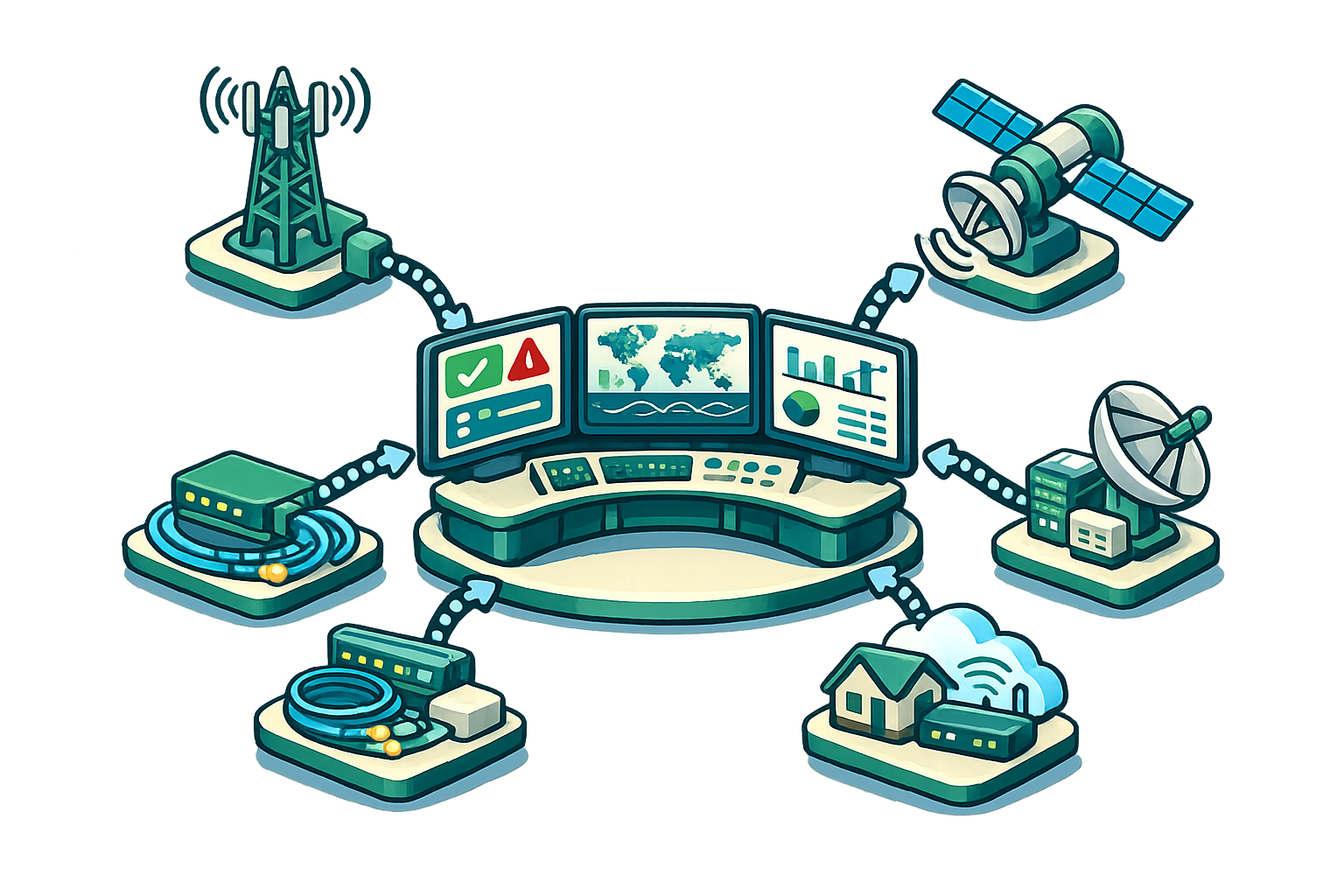
Why Does Network and Server Monitoring Matter in Telecommunications?
Telecommunications providers operate some of the most demanding network environments. ISPs, WISPs, telephone, broadband, and wireless companies must keep services available across broad geographies while supporting customers who rely on connectivity for work, communication, streaming, and urgent needs.
Intermapper gives network operations teams live visibility into device connections, service areas, servers, customer-impacting equipment, and performance conditions so teams can identify problems before customers report them.
Customers expect reliable service
Service areas are geographically distributed
Single device failures can affect many users
SLAs require fast detection and response
Capacity planning is complex
NOCs need clear real-time diagnostics
Intermapper’s Key Capabilities for Network and Server Monitoring in Telecommunications
Monitor ISP, WISP, Broadband, and Wireless Infrastructure
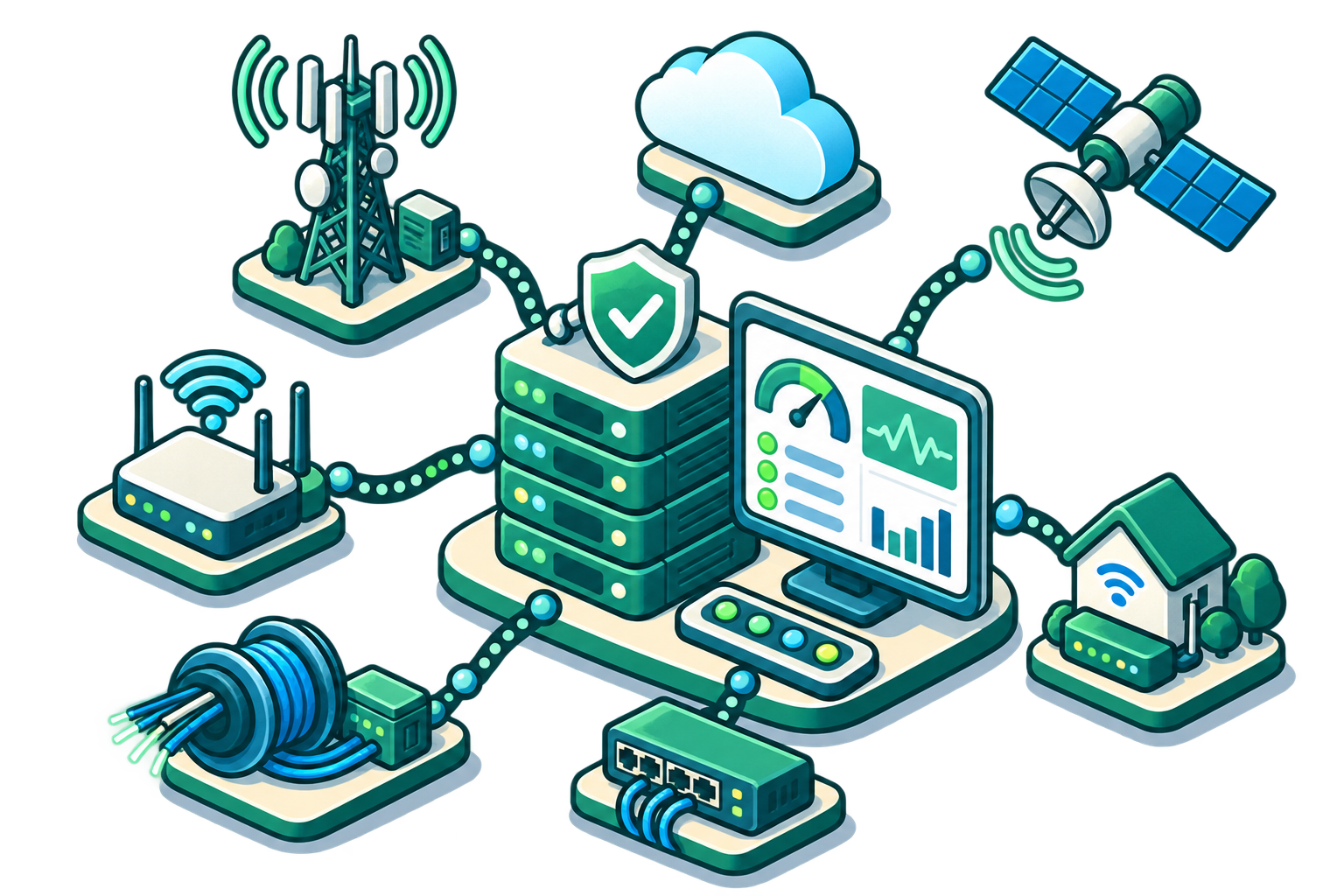
Monitor devices, towers, backhaul equipment, routers, switches, servers, access infrastructure, and customer-impacting devices from live maps.
Support NOC Operations
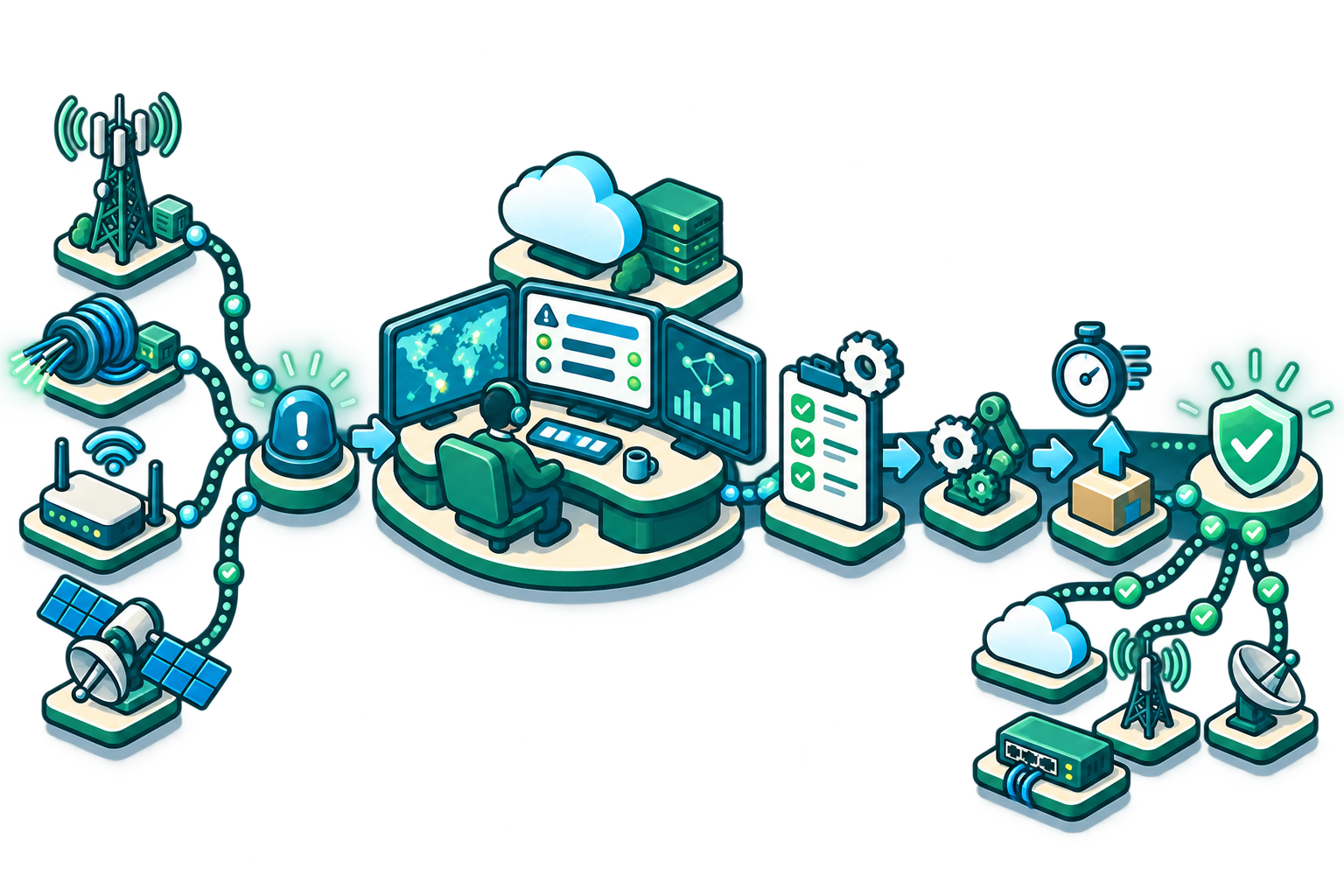
Give network operations teams real-time status, alerts, and diagnostic data to detect issues quickly and prioritize service-impacting events.
Protect SLAs and Customer Satisfaction
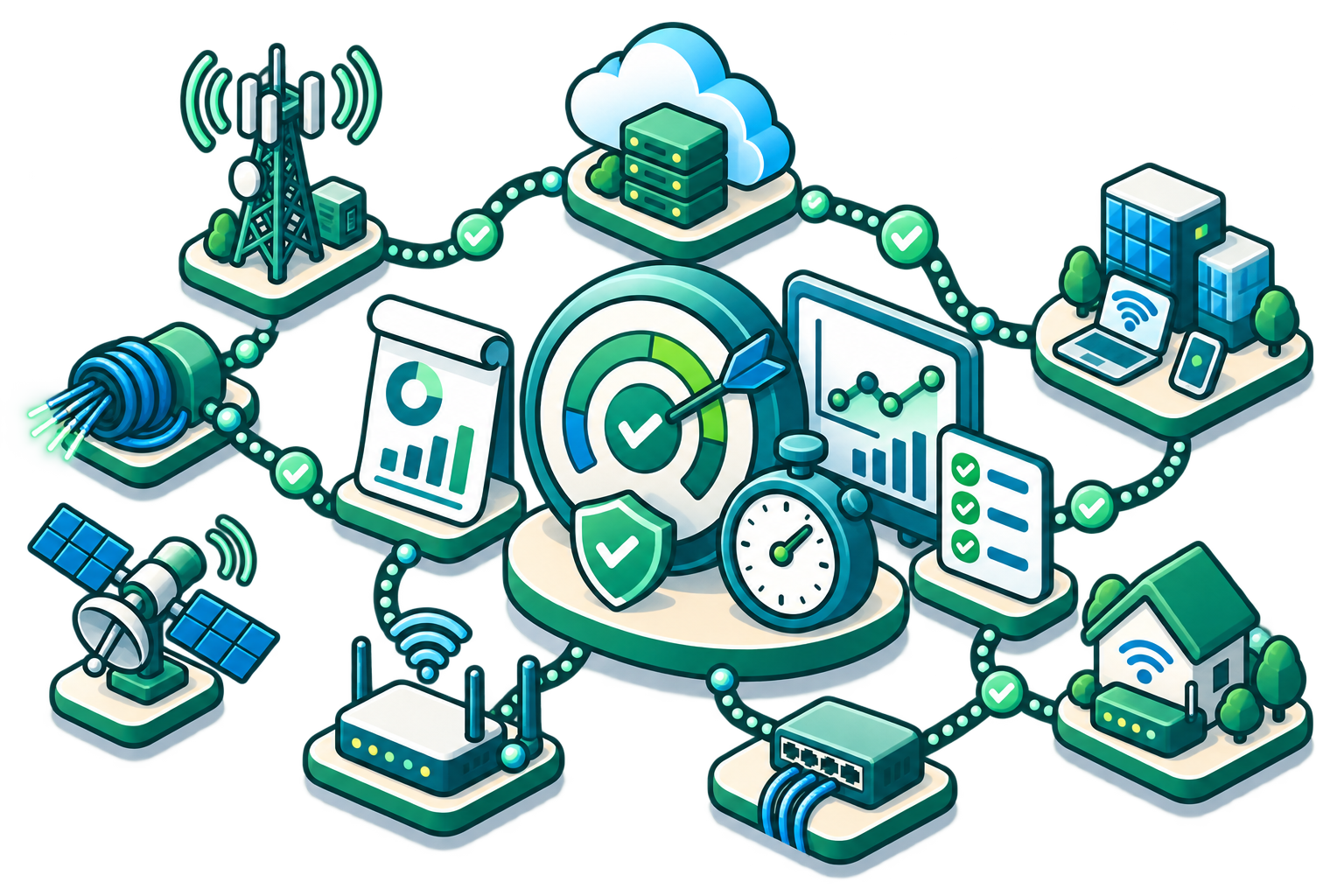
Use thresholds, alerts, and IT reports to identify risk before service-level commitments are missed.
Plan for Cloud and Capacity Demand

Use trend history and reporting to predict capacity needs, cloud service growth, oversubscription strategy, and resource optimization.
Troubleshoot Geographically Distributed Outages
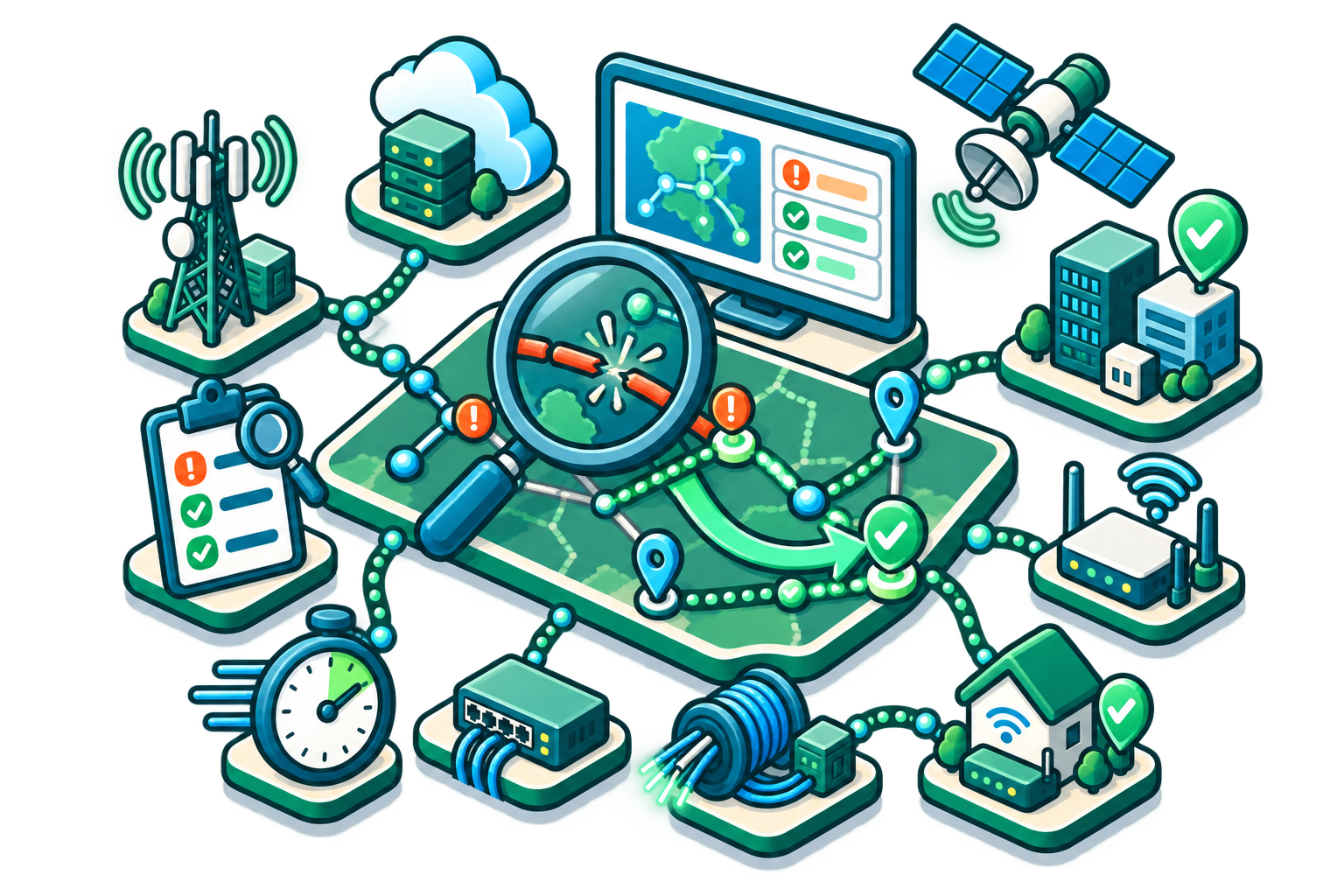
Use live maps to understand whether issues are related to specific devices, links, towers, customer sites, environmental hazards, or traffic bottlenecks.
How Intermapper Solves Telecommunications Network and Server Monitoring Challenges
| Challenge | How Intermapper Helps | Results |
|---|---|---|
|
Broad service areas are hard to visualize
|
Live maps show device and connection status across telecom infrastructure and customer-impacting environments.
|
NOCs can identify affected areas and prioritize response.
|
|
Customers may notice outages first
|
Proactive alerts notify teams when devices fail or thresholds are exceeded.
|
Providers can investigate before end users complain.
|
|
SLAs require measurable performance awareness
|
Reports, historical data, and threshold alerts support SLA reviews and response workflows.
|
Better evidence for service quality and risk management.
|
|
Device failures can cascade
|
Continuous monitoring helps identify faulty routers, switches, bottlenecks, and environmental issues.
|
Faster isolation of the root cause.
|
|
Capacity growth is difficult to predict
|
Trend graphs, capacity reports, and usage data help teams understand demand patterns.
|
Better planning for cloud, bandwidth, and infrastructure investments.
|
|
Customer relationship value depends on proactive service
|
Live visibility helps providers notify customers or act before the customer even notices an outage.
|
Improved customer trust and service differentiation.
|
Trusted by Manufacturing IT Teams Managing Complex Networks

Telecommunications Network and Server Monitoring FAQs
Protect Telecom Service Reliability with Network and Server Monitoring from Intermapper
See What's Happening. Understand Why. Plan What's Next.